
If you’re into astrophotography, especially monochrome imaging, you know how essential a filter wheel can be. These devices let you swap between different filters seamlessly, helping you build up a full-color image much faster than replacing filters manually. But on their own, filter wheels are pretty straightforward gadgets—basically a motorized disk that holds your filters and changes their position.
Most manufacturers stick to similar designs, making it hard to innovate. That is, until Wanderer Astro came along and literally reinvented the wheel with their Snowflake Filter Wheel. They sent me two versions to review: a 14mm thick model designed for 36mm unmounted filters, and a bit bigger 16mm version that handles both 50mm unmounted filters and standard 2-inch mounted ones.
Key Features and Design
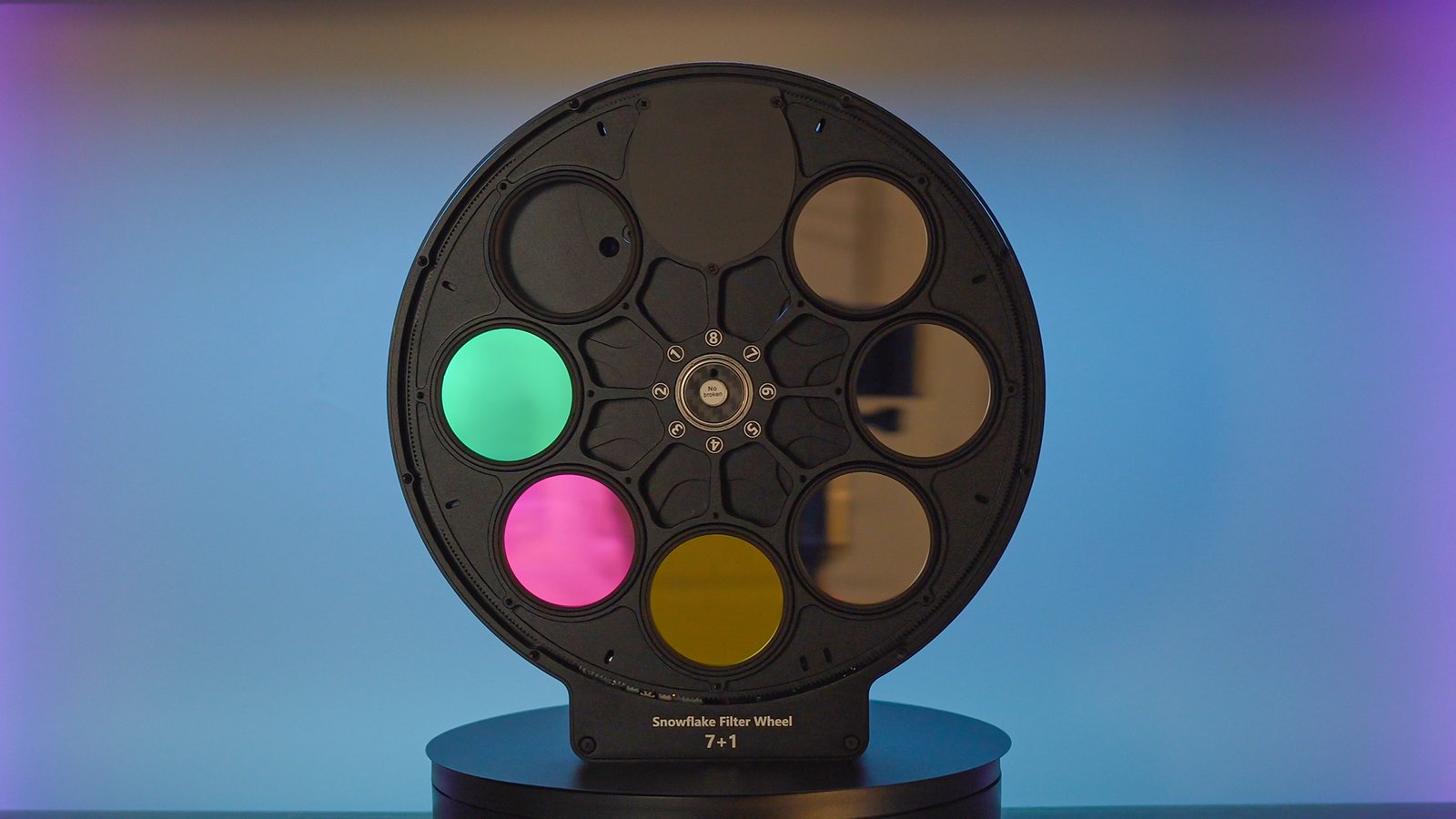
First off, the name “Snowflake” comes from fully enclosed design that resembles a snowflake—super clean and professional, with no exposed motors or circuit boards. It’s an eight-slot filter wheel, but Wanderer Astro positions it as 7+1: seven spots for your main filters, and the eighth dedicated to a dark filter (included in the box).
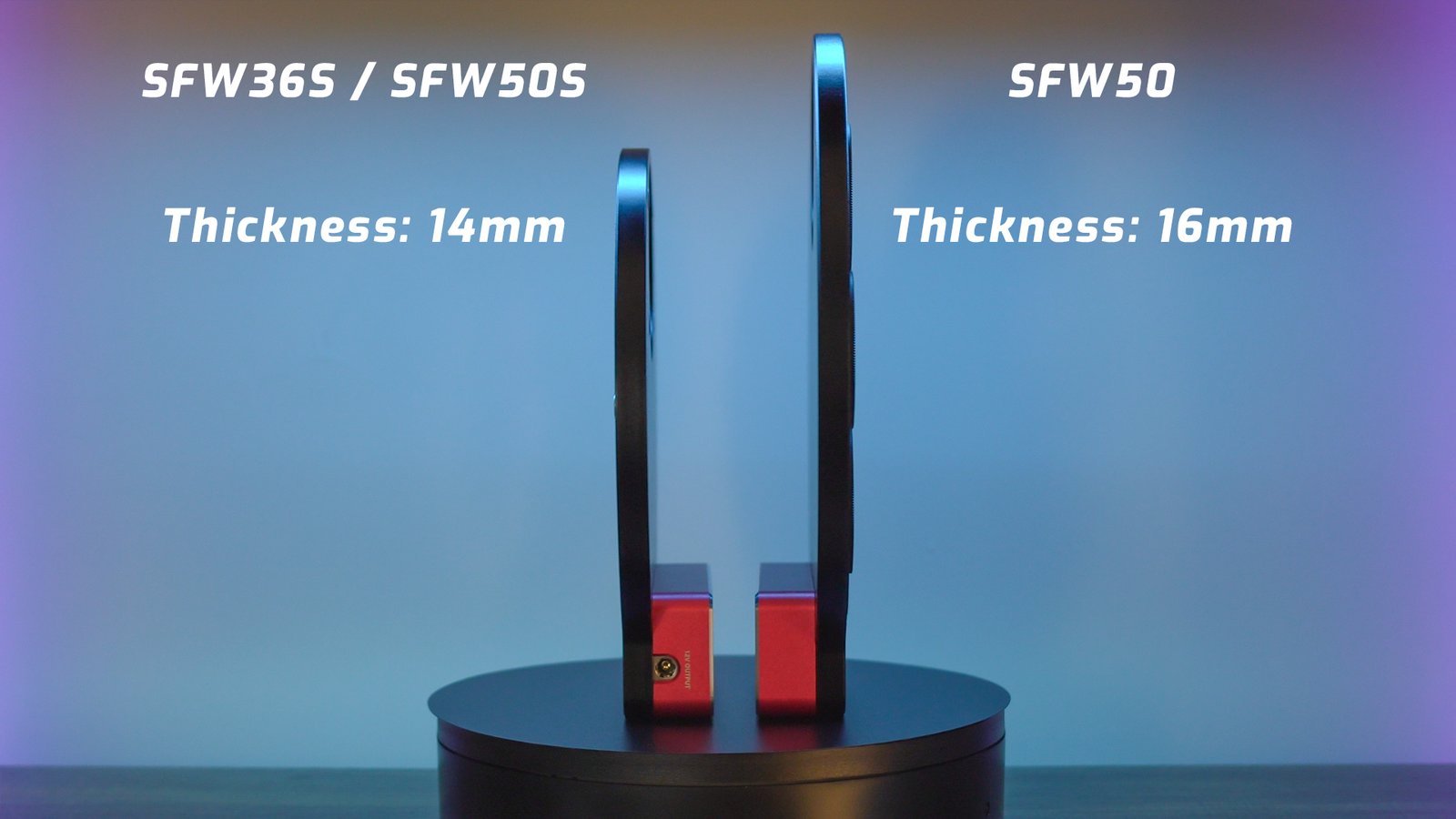
Thickness is a big deal for back focus management, particularly if you’re dealing with limited back focus. The 36mm and 50mm unmounted versions measure just 14mm thick, while the combined 50mm/2-inch model is 16mm—saving a few millimeters compared to competitors. If needed, you can bump up the back focus of the filter wheel to “standard” 20mm by using spacers that are included in the packaging (you get three 2mm ones for the 14mm version and two for the 16mm).
The build quality feels premium: the disk is gear-driven for perfect positioning every time you switch filters. Wanderer Astro has a great demo video showing this precision. Check out the video-demonstration below.
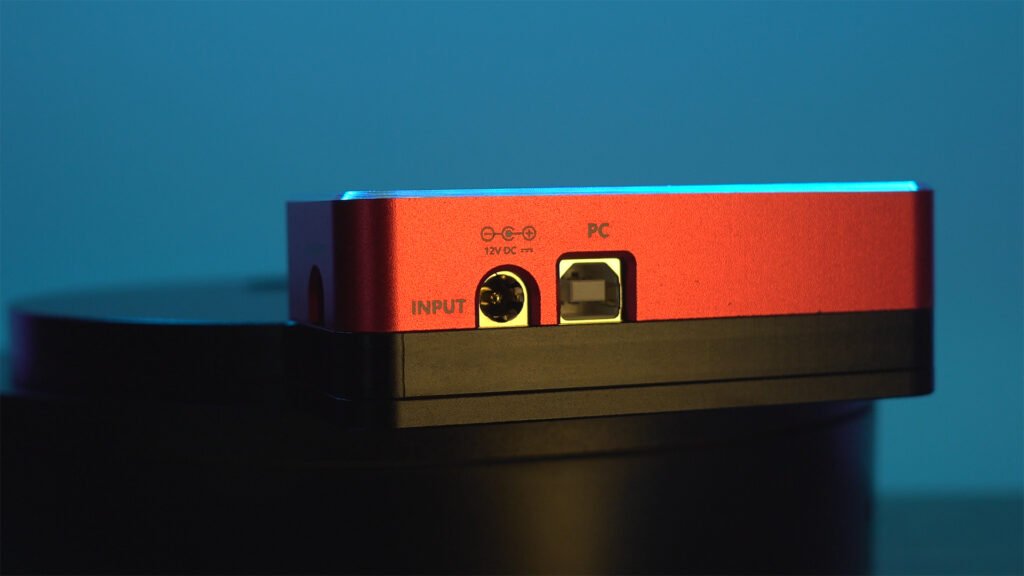
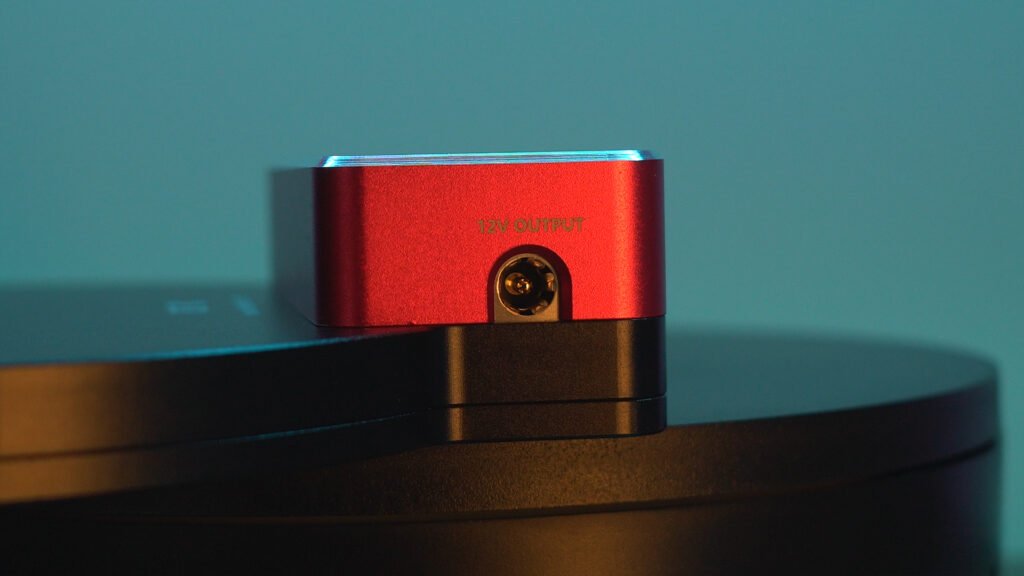
The motor that drives the disk is robust, designed to handle various ambient temperatures, including extreme cold conditions. Yes, it requires a 12V power supply, but Wanderer included a built-in power hub to avoid extra cabling clutter. In my setup, I run one cable from the power box to the filter wheel, and another from the wheel to my imaging camera. After a few imaging sessions with both versions, I had zero issues with power delivery or performance. The motor is a bit loud, but it’s normal. Wanderer Astro explained in an email that they installed stronger motors to ensure stability in freezing temps, leading to more noise.
Mounting and Compatibility
One standout feature is the simple camera connection: the eighth slot’s special shape allows screws to pass right through, so you can attach your camera without disassembling the disk. Compatibility is broad, supporting major brands like ZWO, QHY, ToupTek, and PlayerOne. For off-axis guiders (OAGs), I tested it with a ToupTek OAG, and it worked flawlessly.
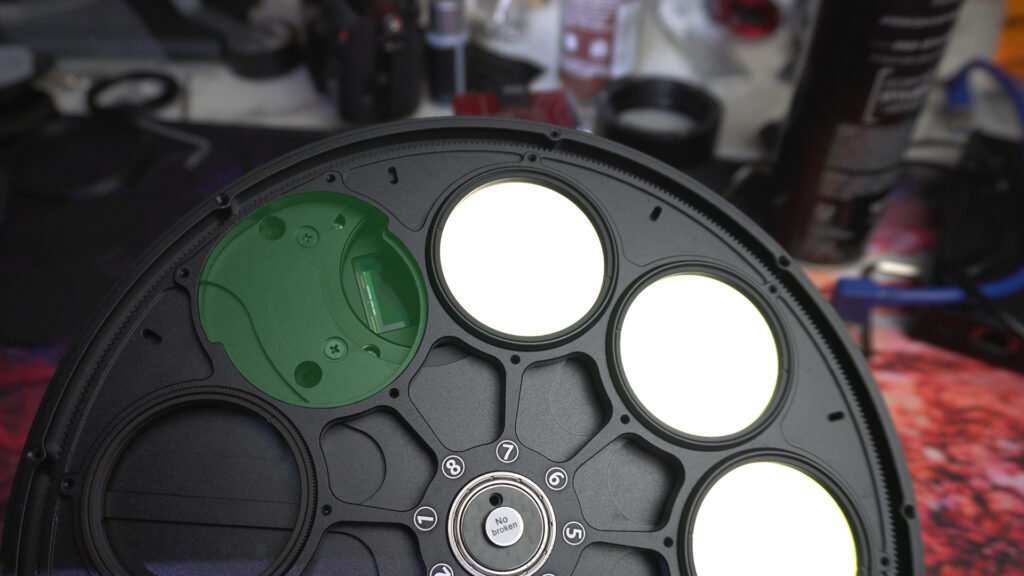
However, I ran into an issue with the SvBony OAG due to its design — I couldn’t attach it properly at the beginning, but I made a custom 3D-printed spacer using PETG-CF filament, which has been rock-solid. If you need the model, I’ve got a free file ready to download, or you can order a printed one.
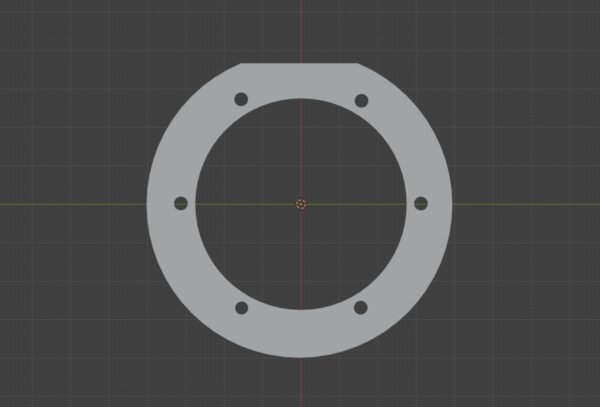
SvBony OAG to Wanderer Snowflake Filter Wheel Spacer Adapter (3D Model)
[Image Placeholder: Photos of the 3D-printed adapter/spacer model, including renders and real-world installation on the filter wheel]
Filter Mask and Installation Tips
Wanderer Astro’s filter wheel also features a one-piece filter mask that secures all filters at once. It has a bit better performance in blocking light leaks compared to “traditional” individual masks. If by any chance you want to use individual filter masks, those are included in the packaging as well.
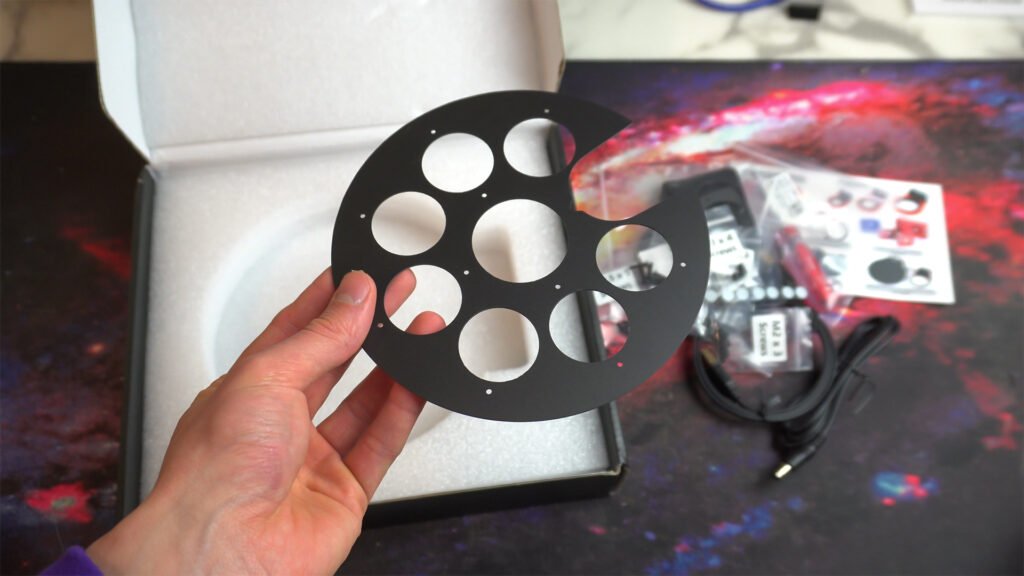
In my 36mm wheel, I have a full set of seven filters (LRGB + SHO), with the eighth slot for the dark filter (though you could swap it for another 36mm unmounted filter if needed). For the larger version, I installed 2-inch filters, but note that the eighth slot can’t take an extra 2-inch filter; however, you can install a 50mm unmounted if you want to use it for something else. A heads-up for 50mm filters: if they’re 3mm thick, you’re good, but thinner ones (like 2mm or 2.5mm) might wobble. You need to use included filter gaskets to secure them better.
Software and Operation
On the software side, drivers install automatically with the latest Wanderer Empire. Once set up, connect via your preferred acquisition software. Personally, I use NINA, and I’ve had no issues with connecting filter or its performance during imaging sessions.
Things to Be Aware Of
First, the abundance of mounting holes is great for compatibility, but with my ToupTek camera, I had to seal outer holes to prevent light leaks. Wanderer Astro provides black stickers, and regular isolation tape works too. Is it a downside? Depends—it’s versatile, but tape on a premium product might look odd. Who cares in the dark, though?
Second, be cautious with screws: don’t go deeper than 3mm into the wheel, or you risk damaging filters. Test-mount accessories on the cap first.
Finally, please note that SvBony’s SV238 OAG needs an additional adapter to work with this filter wheel.
Final Thoughts
To sum up, the Wanderer Astro Snowflake is a low-profile filter wheel supporting eight unmounted filters (with 7+1 config). The camera connection is superior to many options, and the one-piece mask is a nice innovation. Big thanks to Wanderer Astro for the review units! If you’re interested, check out the links to AgenaAstro below—at no extra cost to you, it supports the channel for more reviews like this.
What do you think? If you’ve used the Snowflake, share your experience in the comments. Clear skies!
Pingback:SvBony SV238 Off-Axis Guider Review: Affordable and Upgradable - AstroCreation