After many cloudy nights and a lot of patience, here is my deep-field project: a wide-field view of the reflection nebula NGC 6914 and its surroundings in Cygnus, with a previously uncatalogued emission regions I spotted during processing.
The final image combines visible-light data from the reflection nebula with continuum-subtracted narrowband SHO data. The reflection nebula and stars retain their natural colors taken through RGB filters, while other regions represent continuum-subtracted [SII], Hα, and [OIII] signals mapped to the R, G, and B channels respectively.
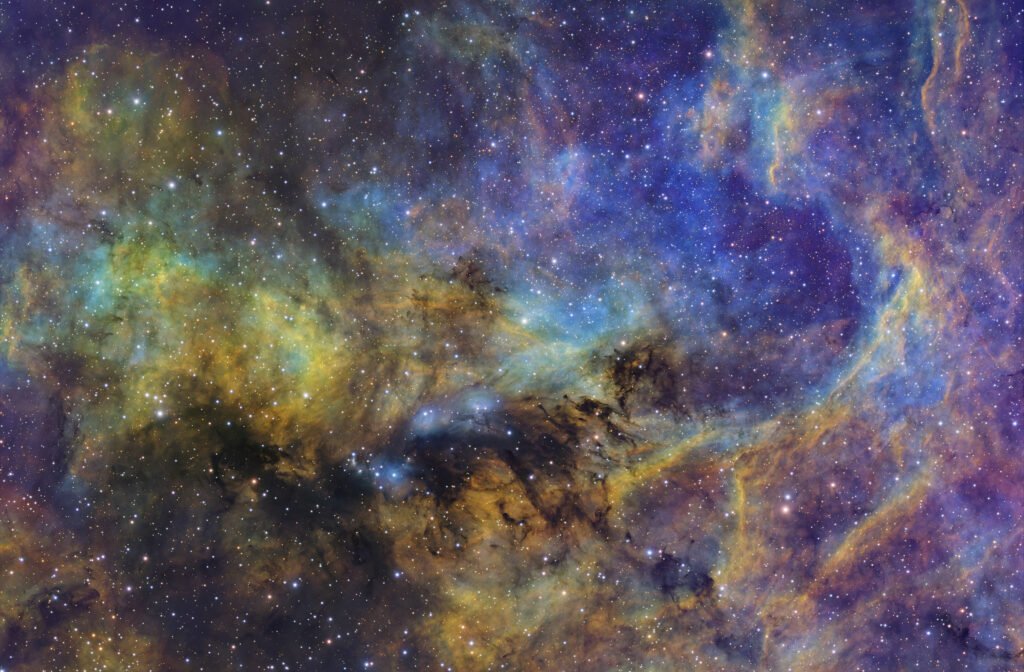
Below are some interesting features of the field I want to highlight.
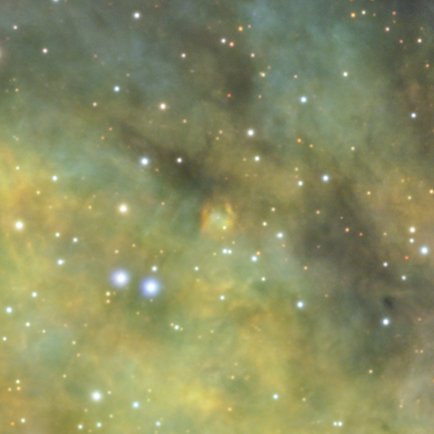
First is a small emission feature at RA 20h 26m 07.40s Dec +42° 12′ 53.6″ (J2000). It shows a clear shell structure that is strongest in SII and Hα, with a brighter Hα core and only a very small, faint OIII signal in the centre. A faint star sits right in the middle. I have checked the latest HASH database, French PN lists, SIMBAD, and Vizier – nothing is catalogued at these coordinates. I submitted the object to Pascal Le Dû as a possible PN candidate. After reviewing the data, he concluded that, due to the strong [SII], lack of a well-defined ring, and no obvious hot blue central star, it is difficult to record this object in a database of planetary nebulae.
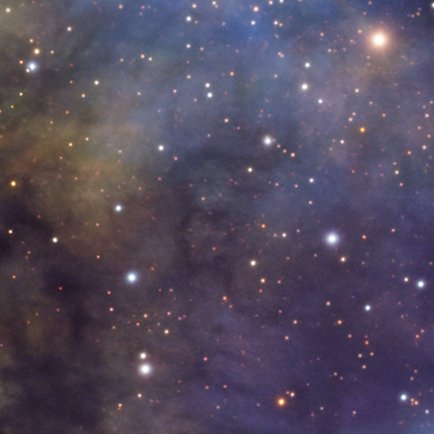
I’m sure everyone knows about Barnard 142 (the “E” Nebula) in Aquila. Well, here is another one I found in this field, although this one is smaller in angular size.


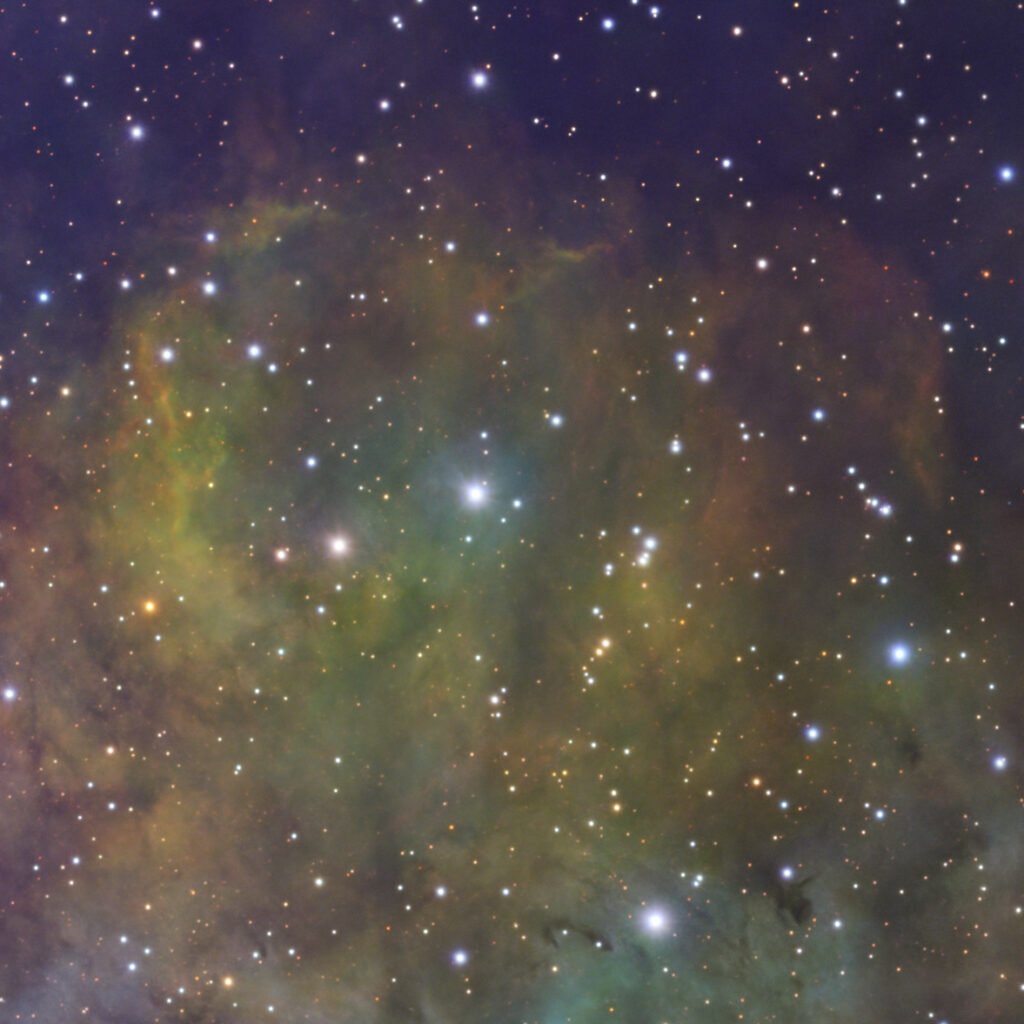
Below is another interesting feature: a close-up on an uncatalogued emission bubble around the B-type star HD 195229 (RA 20h 28m 30.24s Dec +42° 00′ 35.3″). This faint, almost perfectly circular shell is visible in Hα and [SII] and appears to be a stellar-wind bubble, likely created by the strong winds from HD 195229. Once again, I couldn’t find any known catalogued object at these coordinates, so it is another intriguing feature in the rich Cygnus star-forming region.

Lastly, I wanted to draw attention to these structures located near NGC 6914. They show a strong signal in [SII], some Hα, and really faint [OIII] visible only in a few areas. I’m not exactly sure what they are, so I’d be happy to hear any ideas in the comments. Below is the same image with the structures highlighted.

I really enjoy taking long exposure time images, and I look forward to completing future projects!


Below is a link to high resolution version of the image on AstroBin:
